History of Saffron (5) (East and South Asia)

There are various conflicting reports describing the first emergence of saffron in East and South Asia and India.

The first historical reports are related to Persian records.

Many studies show that saffron, along with other spices, was first spread by Iranian rulers in India to fill newly established gardens and parks.

They did this by planting saffron throughout the Persian Empire.

Then, in the 6th century BC, the Phoenicians began to sell Kashmiri saffron through extensive trade routes.

Kashmiri saffron was used to treat soda and fabric dyes.

On the other hand, a traditional Kashmiri legend states that saffron first arrived in the 11th and 12th centuries AD.

When two foreign Sufi ascetics, Khajeh Massoud Wali and Sharifuddin, arrived in Kashmir.

The Sufis fell ill, and sought help from the chief of the tribe to cure their illness.

After recovering, they gave him a glass of saffron to thank the chief of the tribe.

To this day, offerings are made annually in honor of the two holy men, at the beginning of the saffron growing season in late autumn.

In the Indian village of Pampura, a dome-shaped tomb with a golden dome has been erected for the two Sufis.

However, Kashmiri poet Mohammad Yusuf Tang denies this.

He says the Kashmiris have had saffron killed for more than two millennia.

In fact, these ancient shipments are mentioned in Kashmiri Tantric Hindu images.

Ancient Chinese Buddhist accounts cite other cases of saffron arriving in India.

According to legend, an Indian Buddhist missionary named “Median” was sent to Kashmir in the 5th century BC.

Arriving in Kashmir, he observed the first harvest of saffron.

Since then, the use of saffron has spread to the Indian subcontinent.

In addition to being used in food, saffron was soaked in water and used to dye fabrics.

The love for this fabric led shortly after the death of Gautama Buddha, the monks accompanying him to introduce the color saffron as the official color of Buddhist clothing.

Some historians believe that saffron entered China through the Mongol invaders and through Iran.

Saffron is mentioned in ancient Chinese medical texts, including the medicinal book The Great Plant, which dates back to 1600 BC (and is attributed to the Shang dynasty), and contains thousands of treatments for a variety of ailments. The plant is mentioned.

Until the third century AD, there are indications that Kashmiri saffron in China.

“Saffron is native to Kashmir, where people originally cultivate it for donation to the Buddha,” wrote Chinese medical researcher Wan Zan.

Van points out what common uses of saffron were at the time: “Saffron flowers wither after a few days and then saffron is produced.

Its value depends on its solid yellow color. “It can be used in wine.”

In the modern era, saffron cultivation has reached Afghanistan, thanks to the efforts of the European Union and Britain.

They are trying to promote saffron cultivation among poor Afghan farmers instead of profitable and illegal opium cultivation.

Due to the hot and semi-arid climate of Afghanistan, they emphasize that this place is suitable for growing saffron.

Every twelve years, the statue of Gumataria is bathed in saffron by thousands of disciples.

The nutritional value of saffron

Saffron is very valuable because of its special taste, smell and yellow color and is widely used in Iranian food and sweets (especially with rice), confectionery, food and pharmaceutical industries and other industries.

The table below shows the value of nutrients per 100 grams (food).

Nutrients per 100 grams (3.5 ounces)
Energy1,298 kJ (310 kcal)
Carbohydrates ۶۵٫۳۷ g
Fat۵٫۸۵ g
Saturated Fat۱٫۵۸۶ g
Unsaturated Fat۰٫۴۲۹ g
Unsaturated Fat۲٫۰۶۷ g
Protein۱۱٫۴۳ g
Water۱۱٫۹۰ g
Vitamin A۵۳۰ IU
Viamin B1 (thiamine)۰٫۱۱۵ mg (۹٪)
Vitamin B2 (riboflavin)۰٫۲۶۷ mg (۱۸٪)
Vitamin B3 (niacin)۱٫۴۶۰ mg (۱۰٪)
Vitamin C۸۰٫۸ mg (۱۳۵٪)
Calcium۱۱۱ mg (۱۱٪)
Iron۱۱٫۱۰ mg (۸۹٪)
Magnesium۲۶۴ mg (۷۱٪)
Phosphorus۲۵۲ mg (۳۶٪)
Potassium۱۷۲۴ mg (۳۷٪)
Sodium۱۴۸ mg (۶٪)
Zinc۱٫۰۹ mg (۱۱٪)
Selenium۵٫۶ μg
Folic acid۹۳ μg
Vitamin B6 ۱٫۰۱۰ mg
Ash۵٫۴۵ g

Table of nutritional value of saffron

مطالب مرتبط با ارزش غذایی زعفران:

https://vozarasaffron.com/%d9%be%db%8c%d8%b4%e2%80%8c%d9%86%d9%88%db%8c%d8%b3-%d8%ae%d9%88%d8%af%da%a9%d8%a7%d8%b1-%d9%87%d9%86%d8%af/

Patterns of saffron cultivation in the world

Saffron is cultivated in Iran in the following cities:

  • Tart Heydariyeh, Zaveh (sudden Karizak village),
  • Ghainat (in the villages of Bihood, Fondakht, Behnabad, Bidokht, Stand, Abiz, Spad, Ardakol),
  • Ferdows,
  • Basharoye,
  • Sarayan and Birjand in South Khorasan Province
  • Torbat-e Jam, Taybad, Bakhrez, Gonabad, Sabzevar, Shashtmad, Neishabour and Bajestan, Kashmar, Khalilabad and Kuhsorkh cities in Khorasan Razavi province.
  • Fars Province (Natanz) Fars,
  • Kerman
  • Semnan (Shahroud),
  • Lorestan,
  • Qazvin,
  • Ardabil and East Azarbaijan province

Saffron bulbs are grown and cultivated much better in cold regions with high rainfall than in the tropics, and one of the main reasons for distinguishing good saffron from poor saffron is the climatic conditions of the region. The colder the region, the higher the yield. And the quality of saffron goes up.

Due to its warm nature, saffron can largely withstand cold weather. Saffron onion continues to grow normally at a temperature of minus 40 degrees Celsius and fully maintains the freshness and vitality of the leaves.

Annually, about 250 tons of saffron are produced and cultivated all over the world, of which about 230 tons belong to Iran. This is while Iran with an annual production of more than 90

 The percentage of saffron in the world is the first in terms of quantity and quality.

Greece with an annual production of about 6 tons, Morocco 4 tons, Kashmir 3 tons, Spain about 2 tons and Italy one ton after Iran are ranked second to sixth in the world in terms of saffron production,respectively.

مطالب مرتبط:

https://vozarasaffron.com/%d8%a7%d8%b1%d8%b2%d8%b4-%d8%ba%d8%b0%d8%a7%db%8c%db%8c-%d8%b2%d8%b9%d9%81%d8%b1%d8%a7%d9%86/

What are the types of saffron and their differences?

There are different types of saffron at different prices in the market.

Saffron is divided into three general categories: 1- category 2- straw 3- sergol.

The types of saffron in the division are related to the red and yellow parts of saffron.

Saffron in Iran is divided into three main categories.

Keep in mind that the meaning of stigma is the red part and the meaning of cream is the yellow part of saffron.

1- Bunch of saffron

-It is the most original and basic type of saffron

-It is obtained by stacking and drying a whole string of saffron (including stigma and cream).

The cream portion is usually 3 to 5 mm and the stigma depends on the quality of the saffron, longer or shorter.

– The arrangement of the strings in the bunch of saffron is either one-sided or two-sided.

Saffron is called 4th grade saffron in the classification of the National Organization for Standardization and also the standard 1-259.

The coloring power of batch saffron is between 120 and 150 units.

Difference between one-way and two-way layout:

In a one-sided arrangement, the stigmas and creams are stacked on top of each other.

Two-sided arrangement, stigmas on both sides and cream in the middle.

In the two-way arrangement, because the yellow part is in the middle, the stigma is more visible.

Girl Screw: Classification of saffron string is usually done by women, to saffron batch,

It is also called saffron girl or girl bunch.

2- Saffron straw

In straw saffron, the red stigma part of the saffron string is 1 to 3 mm from the yellow cream part.

Because there is more stigma in this type of saffron, it has more coloring power than bunch saffron.

The coloring power of straw saffron is 170 to 25.

– Due to the connection of the stigma to the cream and the reduction of the possibility of being counterfeit, this type of saffron has attracted more trust from buyers.

Saffron is a grade 1, grade 2 and grade 3 in the straw saffron family.

3- Sargol saffron

Sargol saffron, in this type, there is no creamy part (root) and completely red stigmas are separated from each other, forming pure saffron.

In addition to Sargol, the titles Sarqalam, Sarresheh and Mumtaz are used for this type of saffron.

The similarity between Sargol and Pushal

In some cases, straw saffron is also called Sargol

In this case, it is divided into two types: Negin head and Mumtaz head.

Sargol Negin is in fact the above definition of Sargol saffron

Serum Mumtaz actually contains a part of yellow cream.

Result :

– The coloring power of Sargol saffron is more than the rest and it is about 210 to 260 units.

Consumption of Sargol saffron is used more than other types.

4- Saffron Negin Pushal or Pushal Negin

Negin Pushal saffron is a special type of Pushal saffron.

– In Negin Pushal saffron, the stringy strands of red and thick stigma without the creamy part (yellow) are separated from the existing filaments and bulky saffron is prepared.

– The most luxurious and expensive type of saffron is Negin Pushal saffron.

– Has the highest coloring power (between 230 to 270 units).

– In different years, it has usually had a decreasing trend.

Because the production and sale of Negin Pushal saffron, due to the time-consuming and costly process and more activity required for processing,

In some cases, this type of saffron is also called Super Negin.

5- Corner or white saffron

By separating Sargol saffron from the bunch, the root part of the saffron remains, which in Iran is called white or corner saffron.

– Contrary to some people’s belief that the corner has more perfume than Sargol.

– The valuable material of saffron lies only in its red stigma.

– Due to the presence of more moisture in the cream, more aroma of the cream is inhaled.

– Saffron corner is not included in the classification of saffron types, but because of its beautiful color and appearance

And that it is not possible to cheat is taken into account.

مطالب مرتبط:

https://vozarasaffron.com/%d9%be%db%8c%d8%b4%e2%80%8c%d9%86%d9%88%db%8c%d8%b3-%d8%ae%d9%88%d8%af%da%a9%d8%a7%d8%b1-%da%a9%d8%b4%d8%aa/

Application of saffron in different countries

Saffron is used in the famous dishes of some nations of the world and has many uses.

In fact, famous foods have gained their fame due to the use of saffron.

For example, some of the foods of the nations of the world that saffron is used in their preparation are as follows:

– Consumption of saffron in Iran

In a variety of pilaf, yolk, halva, broth, grilled chicken, fish and muscle food.

– Consumption of saffron in Spain

In Paella Valencia food, which includes pilaf, meat, seafood and vegetables.


It is also eaten in Zarzuela Fish Stews, which is steamed fish, and Fabada Austriana.

– Consumption of saffron in France

The French also know saffron well and use it in a variety of foods.

It is eaten in Bouilla Baisse, a spicy fish dish.

– Consumption of saffron in Italy

In Risotto Risotto, which is rice cooked in broth with saffron, and in Cornish Saffron Cake

Consumption of saffron in the UK

In the famous Corn Wall cake.

Consumption of saffron among Uzbeks

In Wedding Pilaf, wedding pilaf.

Consumption of saffron among Moroccans

In Tajine food which includes meatballs and tomatoes.

And Mqualli, chicken cooked in citrus fruits, and Mrouzia, which includes mutton covered with tomatoes and almonds.

Consumption of saffron among Indians

Saffron is eaten in Biryanis, which is a food consisting of rice and spicy vegetables, as well as in sweets made with milk and in yogurt.

– Saffron in the Arabs

The Arabs prepare various foods from saffron as well as special tea.

Arabic coffee must contain saffron and cardamom.

The Indians also have a food called brioni, in which saffron is commonly used.

مطالب مرتبط:

https://vozarasaffron.com/%d9%be%db%8c%d8%b4%e2%80%8c%d9%86%d9%88%db%8c%d8%b3-%d8%ae%d9%88%d8%af%da%a9%d8%a7%d8%b1-%d8%a7%d9%86%d9%88%d8%a7%d8%b9/

How to have colorful saffron?

Until now, we always thought that saffron should be brewed with hot water to have the most color, but Iranian red gold has another method of brewing.

It is a completely different method, that is, with ice, which we will say is the best method in this section.

تهیه زعفران خوش رنگ

Instructions for brewing saffron with ice

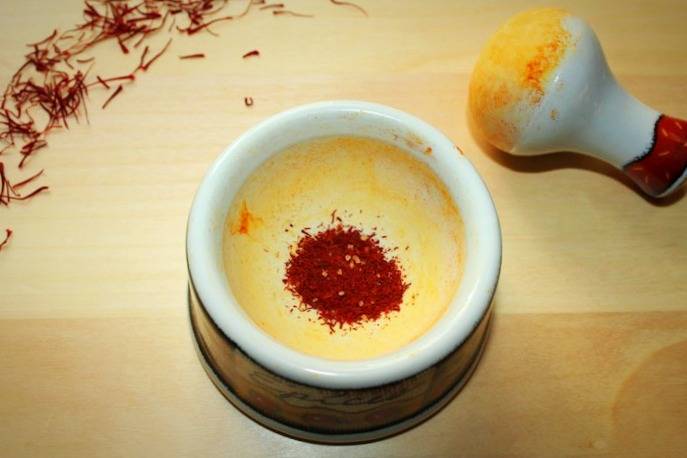
The initial steps are just like brewing saffron with boiling water, which means that you must first grind and grind the saffron well.

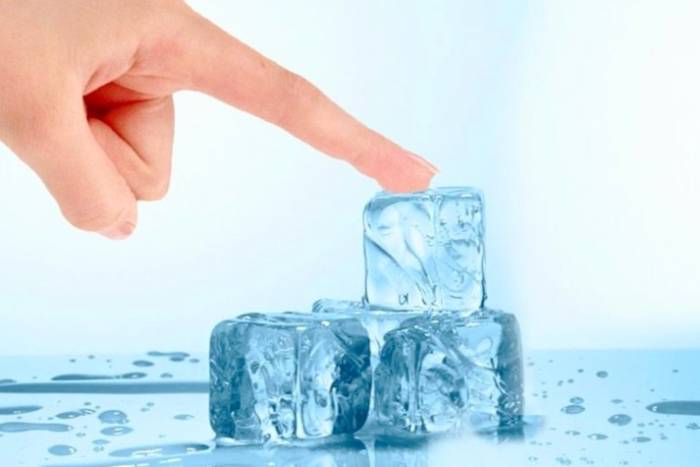
Now you need a few ice cubes instead of hot water,

Pour small pieces of ice into the container in which you poured the saffron powder (the container should be glass).

یخ در زعفران

At this point you are done. Now let the ice melt at room temperature;

Exactly the same process that causes better and more complete coloring of saffron.

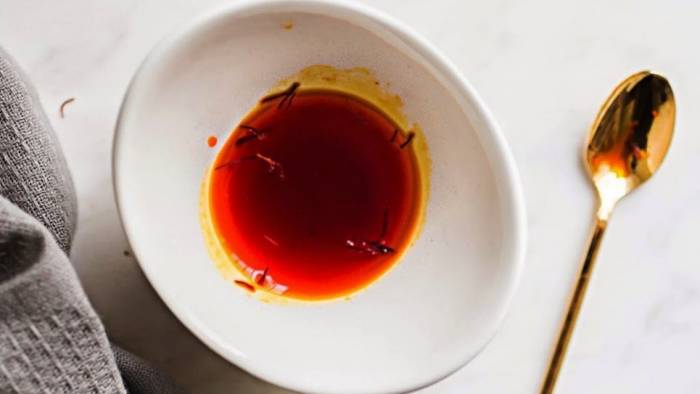
It is interesting to know that the experience of people who have used this method to brew saffron has proven that the method of brewing saffron with ice makes the brewed saffron brewed with the traditional method of boiling water both more fragrant and more colorful.

دم کردن زعفران با یخ

In addition, you can store this solution in a suitable and hygienic container in the freezer

And rest assured that its color will not change.

Related posts:

https://vozarasaffron.com/%d9%be%db%8c%d8%b4%e2%80%8c%d9%86%d9%88%db%8c%d8%b3-%d8%ae%d9%88%d8%af%da%a9%d8%a7%d8%b1-%d9%85%d8%b5%d8%a7%d8%b1%d9%81/